Your Wallet This Week: Fed Rate Hike, 5% Treasury Yield, Recalls, and Airport ID Fees
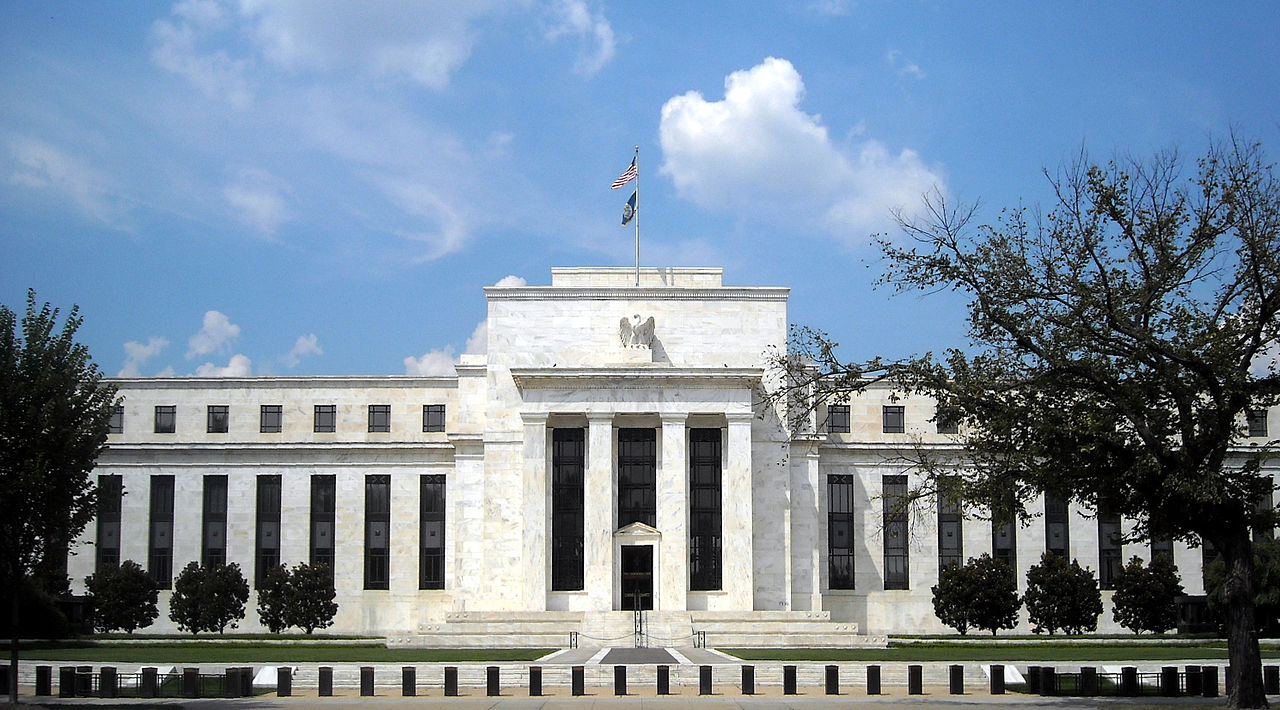
Five separate items landed on American household budgets in the week of September 14-20, 2026, and only two of them were about interest rates. The Federal Reserve raised its target range a quarter point to 3.75%-4.00% on September 16, the 10-year Treasury yield touched 5% for the first time since 2023, a Volkswagen and Audi steering recall opened for VIN lookups, a sprout Salmonella investigation stayed active, and a $45 airport identity-verification fee that had already been in force since February came back into view for anyone flying without a REAL ID.
Key takeaways
- The Fed's quarter point costs about $15 a year on a $6,000 credit-card balance and about $75 a year on a $30,000 variable line - before compounding, and only once the lender resets.
- The 10-year Treasury closed at 5.00% on September 15, 2026, its first 5% reading since 2023, and 5.01% on September 18. An existing fixed-rate mortgage payment does not move with it; a new quote does.
- Recall 26V590 covers 208,724 vehicles and the repair is free, but owner letters were only scheduled for November 10, 2026 - the VIN lookup opened on September 16.
- The sprout outbreak has since been traced to broccoli seed lots: the FDA's October 9, 2026 update counts 32 illnesses and 3 hospitalizations, and the recalled seed packets have no expiration date to screen them out.
- The $45 TSA ConfirmID fee took effect February 1, 2026. It buys an attempt at identity verification, not entry, and it expires 10 days after the travel date you enter.
Figures checked: November 2, 2026. Every figure below was re-verified against the primary source named in it on that date, which is why two of them differ from the versions published in September; see the correction note above the sources.
The household we will follow, and the five items that reached it
A week of consumer news is easier to read if you put a single balance sheet underneath it. So take a household - a reader's household, not anyone's in particular - carrying a $6,000 credit-card balance at 21.00% APR and a $30,000 variable home-equity line, holding a fixed-rate mortgage it had been thinking about refinancing, parking a 2019 Volkswagen Atlas in the driveway, keeping a clamshell of broccoli sprouts in the refrigerator, and sending one adult on a flight without a REAL ID.
Those five facts are enough to sort the week. Two of the items changed what this household owes, one changed what it is driving, one changed what is safe to eat, and one changed what it needs at the airport counter. The sums are small in three cases and open-ended in two, and - as the item-by-item table further down shows - the two with no dollar figure attached are the ones worth doing first.
Tuesday, September 16: the quarter point lands on the card, not the mortgage
The Federal Open Market Committee voted 12-0 on September 16, 2026 to raise the target range for the federal funds rate by a quarter percentage point. The statement's own wording is "to raise the target range for the federal funds rate by 1/4 percentage point to 3-3/4 to 4 percent," and the Associated Press noted it as the first increase since 2023.
For this household the arithmetic is unglamorous. On the $6,000 card balance, an APR moving from 21.00% to 21.25% adds roughly $15 over a full year in simple interest. On the $30,000 variable line, the same 0.25 percentage point adds roughly $75 a year before compounding. Neither number changes the fixed-rate mortgage at all.
What the quarter point does not do is move every lender by exactly a quarter point on the same day. Card and line-of-credit agreements reset on their own schedules and against their own index definitions, so the useful step this week is clerical rather than financial: write down the current APR, the balance, and the next reset date on each variable account, so that next month's statement can be checked against something.
The same caution applies in the other direction, to the deposit offers that follow a rate increase. A headline yield only means something next to the five terms that govern it: the annual percentage yield rather than the nominal rate, the minimum balance that earns it, the early-withdrawal penalty, the deposit-insurance coverage, and how long the rate is guaranteed. An offer that wins on the first and loses on the other four is not a better offer.
The week the 10-year hit 5%: refinance quotes move, the existing payment does not
The 10-year Treasury yield is the number that sits underneath a mortgage quote, and it crossed a round threshold this week. The Treasury's daily constant-maturity series puts the 10-year at 5.00% on September 15, 2026 - the first 5% reading in that series since 2023 - then 5.01% on September 16, 4.94% on September 17, and 5.01% again on September 18. Coverage of the move focused on the 18th; the series itself shows the line was first touched on the 15th, the day before the Fed met.
The distinction matters for this household in one direction only. A fixed-rate mortgage already closed is a contract: a 5% benchmark does not change its payment, its balance, or its term. What a 5% benchmark changes is the price of borrowing that has not been committed yet - a refinance, a cash-out, a home-equity draw, a car loan written this month.
So if the refinance idea is still live, the comparison has to be built to be comparable. Ask each lender for a loan estimate on the same day, with an identical loan amount, identical points, an identical lock period, and identical credit assumptions, and then compare the APR and the total five-year cost rather than the headline rate. Points in particular can take years to break even, and a quote that wins on the rate line can lose on the five-year total.
The AP also flagged that oil prices stayed volatile after their sharp rise during the Iran conflict, which is the mechanism that keeps a yield at 5% from being a purely financial story: fuel feeds the inflation prints that feed the next rate decision.
The recall letter that will not arrive until November 10
NHTSA campaign 26V590, filed by Volkswagen Group of America, covers an estimated 208,724 vehicles: certain 2018 Volkswagen Tiguan, 2018-2019 Volkswagen Atlas, and 2019-2021 Audi Q3 models. The bolt attaching the steering rack to the subframe may corrode and break, which can break the steering rack housing and cause a loss of steering control. Dealers replace the right-side steering-rack mounting bolt at no cost.
Two dates decide what this household should do. VINs became searchable on NHTSA.gov on September 16. Owner notification letters were scheduled for November 10, 2026 - roughly eight weeks later. A 2019 Atlas sits inside the listed model-year range, which is exactly why the model year is not the test: recalls are built from production records, and only the VIN lookup settles whether a specific vehicle is included.
The free remedy also sets the fraud boundary. A recall repair carried out at a franchised dealer costs the owner nothing, so any offer to perform or expedite it for a fee is not part of the campaign.
The sprout investigation that changed shape after this household bought sprouts
In the week this article originally covered, the advice was to check the clamshell in the refrigerator: broccoli sprouts grown by Evergreen Fresh Sprouts, in plastic bags or clamshell containers, with expiration dates of September 7, 9, 11, 14 and 16, and distribution confirmed in Idaho, Montana and Washington. The FDA's September 9 update counted 22 illnesses in four states with two hospitalizations.
That is no longer where the investigation stands, and the change runs against the household's instinct. As of the FDA's October 9, 2026 update, the outbreak - Salmonella Bovismorbificans - has been traced to a contaminated broccoli seed lot, and the count is 32 illnesses, 3 hospitalizations and no deaths. The recalls now extend past the sprouts to seed products sold to home growers: Waltham 29 broccoli sprouting seeds from Gardeners Basics (1 lb pouch, UPC 848137042889), Calabrese broccoli seeds from Eden Brothers (lots 1022067 and 1022068, supplier lot W4105), and Home Grown green sprouting calabrese seeds from EAK Distribution (8-oz pouch, lot code AUG172026).
The two agency figures on the FDA's own page do not line up, and it is worth saying so rather than picking one. The text names six states with cases (ID, MN, MT, OR, UT, WA) while the CDC case map on the same page shows four (ID, MT, UT, WA). A reader cannot resolve that from outside, and the cheaper direction to be wrong in is the wider one: treating the outbreak as a six-state, still-open investigation costs a discarded seed packet, while treating it as a closed four-state event costs an avoidable illness. Onset runs 12 to 72 hours after exposure, and young children, older adults and people with weakened immune systems carry the higher risk.
For this household the practical consequence is a swap. The clamshell with a September expiration date is past date and off sale, so the refrigerator is no longer the place to look; a seed packet in a garage or a seed-starting kit is, and a seed packet has no use-by date to screen it out. Washing does not make a recalled product safe either - the contamination here is in the seed, before the sprouting step.
The $45 airport fee that was already eight months old
The item most likely to be misread as news is the one that had been in force the longest. TSA's ConfirmID page states the fee plainly - "Travelers without an acceptable form of ID must pay a $45 fee" - under the heading "For travel on or after February 1." The agency announced it in a press release dated January 15, 2026, and it took effect February 1, 2026, about eight months before the week this roundup covers.
Tip: With rates moving and new ID rules at the airport, it helps to track variable-rate payments in one place — a simple budget planner works well — and to keep your passport, REAL ID paperwork, and VIN records together in a home safe. (These are Amazon Associate links — we may earn a small commission on qualifying purchases.)
The mechanics are narrow enough to get wrong. The $45 can only be paid through Pay.gov, by bank account (ACH), debit card, credit card, Venmo or PayPal. The form asks for the traveler's legal name, travel start date and email address, and the payment is valid for 10 days from the start date entered - so paying early for a trip three weeks out buys nothing. Each adult 18 or older without acceptable ID completes the process separately, and the Pay.gov confirmation email has to be kept and shown at the checkpoint as a printed or electronic receipt.
What the fee does not buy is passage. TSA's own wording is that it will "attempt to verify your identity" and that there is no guarantee it can, and the agency calls using ConfirmID optional. For this household the cheaper answer is upstream: a valid passport is an acceptable ID, so the question to settle before the flight is whether one exists and is in date, not whether $45 is worth paying at the counter.
What the week cost this household, item by item
| Item | What it costs this household | What ignoring it costs | Date on the calendar |
|---|---|---|---|
| Fed quarter point (3.75%-4.00%) | About $15/year on the $6,000 card; about $75/year on the $30,000 line | Nothing immediate - but an unrecorded reset date makes the next statement unauditable | Voted September 16, 2026; resets on each lender's schedule |
| 10-year Treasury at 5% | $0 on the existing fixed-rate mortgage | A refinance compared across different days and different point structures | 5.00% on September 15; 5.01% on September 18 |
| Recall 26V590 (2019 Atlas) | $0 - the bolt replacement is free at a dealer | Possible loss of steering control while waiting for a letter | VIN lookup open September 16; letters scheduled November 10, 2026 |
| Sprout and seed recalls | The price of one discarded seed packet | Onset in 12-72 hours; 3 of the 32 reported cases were hospitalized | FDA update October 9, 2026; seed lots carry no expiration date |
| TSA ConfirmID | $45 per adult, with no guarantee of passage | A missed flight at the ID check | In force since February 1, 2026; payment valid 10 days |
Read down the third column and the week sorts itself. If this household could only do one thing before Monday, it would be the VIN lookup: it is free, it takes a minute, the failure mode it guards against is a steering component rather than a line item, and the letter that would prompt it was still seven weeks away. Second would be the seed packet, for the same reason in a smaller form - an irreversible outcome against a trivial cost. The passport question comes third, because it has a deadline the household controls. The two rate items come last, not because $90 a year is nothing, but because they are the only two on the list where waiting a week changes nothing and shopping carefully changes something.
FAQ
Did the Fed's September increase change my fixed-rate mortgage payment?
No. The September 16, 2026 decision raised the federal funds target range to 3.75%-4.00%, which prices overnight bank borrowing. A fixed-rate mortgage already closed keeps its rate, payment and term. The Fed decision reaches a homeowner only through new borrowing - a refinance, a cash-out, or a home-equity draw.
Does a 0.25-point Fed move raise my credit-card rate by exactly 0.25 points?
Not necessarily, and not necessarily this month. Variable accounts reset on the schedule and index definition written into the agreement, so the size and the timing both come from the contract rather than from the Fed. On a $6,000 balance the full quarter point is worth roughly $15 a year, which is why recording the APR and the next reset date is the useful step rather than reacting to the announcement.
My Atlas is a 2019. Is it covered by recall 26V590?
The campaign lists 2018-2019 Atlas models among 208,724 vehicles, so a 2019 Atlas is inside the range - but the range is not the test. Recalls are built from production records, so only the VIN lookup on NHTSA.gov, open since September 16, settles it. If the vehicle is included, the right-side steering-rack mounting bolt is replaced free of charge; owner letters were scheduled for November 10, 2026.
The sprouts in my refrigerator expired after September 16. Is the recall over?
The Evergreen Fresh Sprouts product is past its expiration dates and no longer for sale, but the investigation is not over and it moved. The FDA's October 9, 2026 update traced the outbreak to a contaminated broccoli seed lot and counts 32 illnesses with 3 hospitalizations, and the recalls now cover seed packets sold to home growers - which carry lot codes rather than expiration dates.
Is the $45 airport fee new, and does paying it get me through security?
It is not new: TSA announced it on January 15, 2026 and it applies to travel on or after February 1, 2026. Paying it buys an attempt at identity verification, not entry - TSA states there is no guarantee. The payment goes through Pay.gov only, is valid 10 days from the travel start date entered, and must be completed separately by each adult 18 or older.
More from USNewsExplained
- Last week's wallet roundup: August inflation, travel costs, food safety, and the Fed meeting
- Record gas prices, health premiums, and household planning
- The stopgap funding law and what it changed
This roundup separates what agencies published from what a reader has to calculate. The household above is an illustration built from the figures in the sources below, not a real customer or a lender quote, and the interest figures are simple-interest scenarios. Nothing here is individualized financial, medical, legal or travel advice; for the recall and the outbreak, the agency pages are the authority and are linked in full.
Correction November 2, 2026: the 10-year Treasury's first 5% reading since 2023 was September 15, 2026 (5.00%), not September 18 (the 18th closed at 5.01%), per the Treasury daily constant-maturity series; and the sprout outbreak figures have been updated from the FDA's September 9 count of 22 illnesses in four states with two hospitalizations to its October 9, 2026 count of 32 illnesses and 3 hospitalizations, with the source traced to recalled broccoli seed lots (FDA outbreak investigation page; Board of Governors H.15 series via FRED).
Primary and authoritative sources
- Federal Reserve: September 16, 2026 FOMC statement (target range, 12-0 vote)
- Board of Governors H.15: 10-year Treasury constant maturity, daily (FRED series DGS10) (September 15-18, 2026 closes)
- Associated Press: Federal Reserve rate increase
- Associated Press: Treasury yields and oil-price market effects
- NHTSA recall acknowledgment 26V590 (208,724 vehicles, remedy, November 10 notification)
- FDA: Salmonella outbreak investigation linked to sprouts (October 9, 2026 update; seed recalls)
- TSA: $45 fee option for air travelers without a REAL ID begins February 1 (January 15, 2026)
- TSA: ConfirmID requirements, Pay.gov process and $45 fee
Start Here: every explainer by topic · About · Privacy Policy


Comments
Post a Comment